
Published: Thursday, May 21, 2026 | Breaking News
Africa is confronting a public health emergency of a character that demands the continent’s full attention and the world’s urgent support. The Bundibugyo virus outbreak now spreading through eastern Democratic Republic of Congo and into Uganda represents a distinct threat from previous Ebola outbreaks because, unlike the Zaire strain that past vaccines target, Bundibugyo has no approved vaccine and no specific approved therapeutic treatment. Every health system response must rely entirely on isolation, contact tracing, and supportive care.
The WHO Director-General declared a Public Health Emergency of International Concern on May 16, 2026, acting without waiting for the formal Emergency Committee process because of the speed at which cases were appearing and crossing borders. This is the seventeenth outbreak of Ebola in DRC since the virus was first identified in 1976, but it is the first major Bundibugyo outbreak in years, and it is unfolding in Ituri Province, a region marked by active armed conflict that severely limits health workers’ ability to reach affected communities.
By May 20, the outbreak had been confirmed in at least eleven health zones across Ituri Province, with an additional case detected in Goma, the major commercial hub of North Kivu Province and a city of nearly two million people with significant cross-border traffic to Rwanda and Uganda. The presence of the virus in Goma is one of the most alarming developments of the outbreak so far. Goma’s position as a regional transit hub creates transmission pathways that are far harder to trace and interrupt than cases in remote rural areas.
The human profile of the outbreak is telling. Most confirmed cases in DRC fall in the 20-to-39 age group, the economically active population that forms the backbone of household income and community function. Two-thirds of cases are female, a pattern that reflects women’s primary roles as healthcare providers within families and communities, and as the people who most often prepare bodies for burial, which represents one of the highest-risk exposure moments for Ebola transmission.
Uganda’s response has been fast and serious. Two confirmed cases in Kampala, linked to travelers from Ituri, were identified on May 15 and 16. Uganda’s government moved immediately to postpone the annual Martyrs’ Day celebration, which draws up to two million pilgrims from across East Africa to Namugongo. President Museveni’s decision drew praise from the WHO Director-General as exactly the kind of decisive national action that can prevent a localized outbreak from becoming a continental crisis.
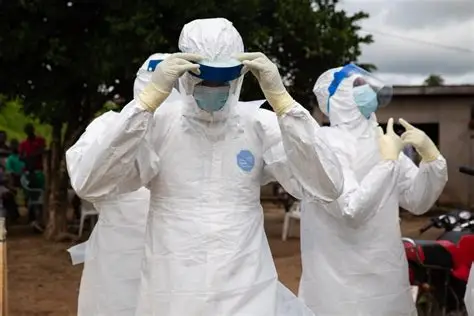
The Africa Centres for Disease Control and Prevention is coordinating the regional response, working with WHO, Medecins Sans Frontieres, the International Committee of the Red Cross, and multiple national health ministries. The Africa CDC is specifically focused on cross-border surveillance, laboratory capacity, contact tracing software deployment, and securing personal protective equipment supplies for health workers in affected zones. Health workers have paid a disproportionate price in this outbreak, with multiple deaths already recorded among nurses and community health workers who were among the first exposed.
The absence of a vaccine creates an accelerated research imperative. The Coalition for Epidemic Preparedness Innovations, known as CEPI, has activated its rapid response mandate for the Bundibugyo strain, reaching out to pharmaceutical partners about candidate vaccines that exist in pre-clinical stages of development. A Phase 1 trial for a Bundibugyo vaccine candidate could potentially begin within months if emergency regulatory pathways are invoked, but even the most optimistic timeline sees no emergency-authorized vaccine available until late 2026 at the earliest.
African governments beyond DRC and Uganda are not waiting to be asked. Rwanda activated its border surveillance protocols immediately after the Goma case was reported. Kenya’s Ministry of Health issued travel advisories and activated airport screening at Jomo Kenyatta International Airport in Nairobi. Tanzania, Burundi, and South Sudan all issued public health alerts. The regional response architecture built after the 2014-2016 West Africa Ebola catastrophe, which killed more than 11,000 people, is being tested under real conditions.
Read More: Africa’s Economic Power Map Redraws as Ghana Surges to Eighth Largest Economy and Ethiopia Posts Continent’s Fastest Growth
What is needed now from the international community is resources without conditions and speed without bureaucracy. Outbreak response in DRC’s Ituri Province requires security escorts for health teams, helicopter access to remote areas with no road access, community liaison officers who speak local languages and are trusted by the populations they serve, and a supply chain for protective equipment that does not break down. The WHO and Africa CDC both have frameworks for this, but framework without funding is not a response.
Africa has learned from every previous Ebola outbreak. The continent’s health systems, while still under-resourced by global standards, are stronger than they were in 2014. The regional early warning systems are more integrated. The international partnerships are more established. But Bundibugyo, with its higher historical fatality rate and its absence of countermeasures, is testing that hard-won capability at the worst possible time, in one of the continent’s most conflict-affected regions. The next four weeks will determine whether this outbreak is contained or whether it becomes the defining health crisis of 2026.


