
Theafricastandard.com | Breaking News | May 26, 2026 | DRC | Uganda | Health Emergency
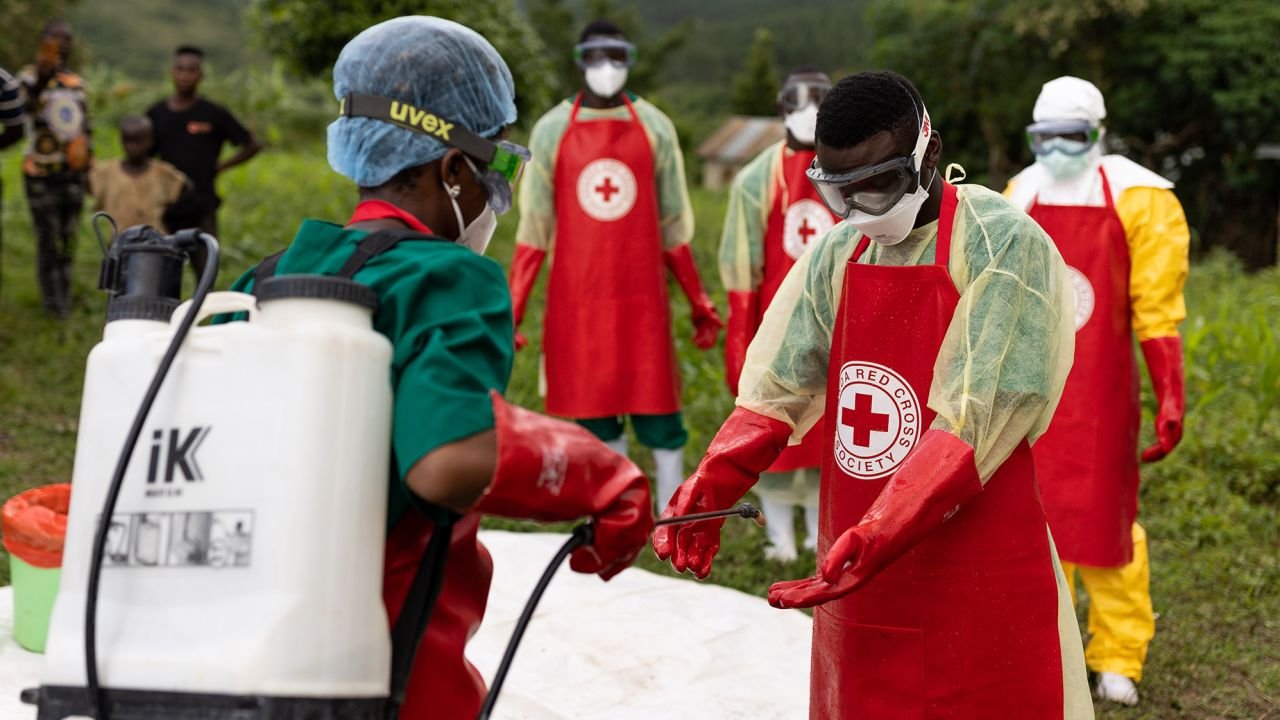
Eastern Africa is in crisis. The Democratic Republic of Congo’s 17th Ebola outbreak since 1976 has now killed at least 231 people, infected more than 1,000 others in suspected and confirmed cases, and spread into Uganda’s capital Kampala, forcing the World Health Organization to declare its highest possible alert level and prompting warnings that ten African countries now face imminent risk of receiving the virus. The outbreak, caused by the Bundibugyo strain of Ebola for which no vaccine or treatment exists, began in Ituri Province in northeastern DRC and has expanded with alarming speed.
The initial detection failure made everything worse. In early May, a hospital in Bunia Health Zone recorded a cluster of severe illnesses affecting healthcare workers. Initial samples tested negative for Ebola, creating a dangerous window during which the virus spread unchecked. A second round of testing on May 14 identified the Bundibugyo virus in eight of 13 samples. The DRC government officially declared the outbreak on May 15, by which point hundreds of suspected cases had already accumulated across multiple health zones.
For the DRC, this outbreak arrives just five months after the previous one ended. In December 2025, authorities declared an end to an Ebola outbreak in Kasai Province that claimed 45 lives. The proximity in time reflects the chronic vulnerability of a country where conflict, displacement, inadequate healthcare infrastructure, and extreme poverty create conditions in which Ebola outbreaks recur. The DRC hosts more Ebola outbreaks than any other country on Earth, and each episode tests the capacity and resilience of a health system that never fully recovers between emergencies.
The Bundibugyo complication is severe. The vaccines and therapeutics developed and stockpiled after the 2014 West Africa epidemic and subsequent outbreaks target the Zaire ebolavirus. The Bundibugyo strain is genetically distinct enough that those tools provide limited or no protection. Case fatality rates in previous Bundibugyo outbreaks ranged from 30 to 50 percent. Without effective countermeasures, survival depends almost entirely on early detection, rapid isolation, and supportive clinical care, all of which are difficult to deliver at scale in the remote and conflict-affected terrain where this outbreak is occurring.
Uganda represents the critical international test of containment. The five confirmed cases in Kampala are all linked to travel from Ituri, but Kampala is a major East African hub city with air connections to dozens of countries. Uganda’s health authorities, who have significant experience managing Ebola because of their proximity to DRC, immediately activated contact tracing protocols when the first cases were confirmed on May 15 and 16. Three additional cases confirmed on May 23 suggest that containment is challenging, but the public health response has been faster here than in previous cross-border episodes.
Africa CDC’s Public Health Emergency of Continental Security declaration on May 18 triggered the release of continental emergency response resources and activated coordination mechanisms with member states across the African Union. The ten countries identified as at high risk include nations connected to DRC and Uganda by significant air and road traffic, spanning from Rwanda and Tanzania in East Africa to the Central African Republic and Republic of Congo in Central Africa.
The response is receiving international support. The U.S. CDC mobilized resources through its established relationships with the DRC and Uganda health ministries and is supporting laboratory capacity, field epidemiology, and logistics. The U.S. Embassy in Uganda published a formal Ebola response update on May 23. The State Department and Department of Homeland Security on May 18 announced enhanced travel screening at U.S. airports for arrivals from affected countries, a precautionary measure informed by the 2014 experience of diagnosed Ebola patients arriving in the United States.
WHO has been tracking the community engagement challenge closely. In Ituri, decades of armed conflict have created communities where trust in government and international institutions is limited. Ebola response requires people to report illness quickly, accept isolation measures, allow contact tracing, and in some cases accept the loss of traditional burial practices that carry spiritual significance. Achieving cooperation for all of these behaviors in communities with valid historical reasons for distrust requires intensive, culturally competent engagement that takes time the outbreak does not readily allow.
Read More: DRC Ebola Bundibugyo Outbreak Kills 231 People and Threatens to Engulf East Africa as WHO Declares Highest Possible Alert Level
The economic impact on the DRC and Uganda is also significant. Health emergency declarations affect travel, trade, and investor confidence. Airlines have already begun reviewing routes to the region. Cross-border trade that sustains livelihoods in both countries faces new friction as border health screening and restrictions tighten. The humanitarian cost of the outbreak extends well beyond the direct toll of illness and death.
For Africa, this outbreak is a moment of institutional testing. The continent’s health emergency architecture, built and strengthened in the years since 2014, is being activated at scale under genuinely difficult conditions. If that architecture contains the outbreak effectively, it will demonstrate that Africa’s investment in health emergency capacity has produced real results. If the outbreak continues to expand, the pressure to revisit and strengthen those systems will intensify. Either way, the 231 lives already lost represent a human cost that demands the most urgent and effective response possible.


