
Theafricastandard.com | Breaking News | May 30, 2026 | Africa | Ebola | DRC | Uganda | Public Health
Uganda sealed its border with the Democratic Republic of Congo on May 28, 2026, a decision that underscores the severity of the Bundibugyo Ebola outbreak that has now reached 1,262 suspected and confirmed cases and killed at least 241 people across the two countries. The border closure, the first such measure Uganda has taken in response to any Ebola outbreak in its history, reflects the Ugandan government’s assessment that contact tracing and health monitoring alone cannot adequately contain a virus that has already appeared in Kampala’s dense urban population and threatens to expand further across East and Central Africa.
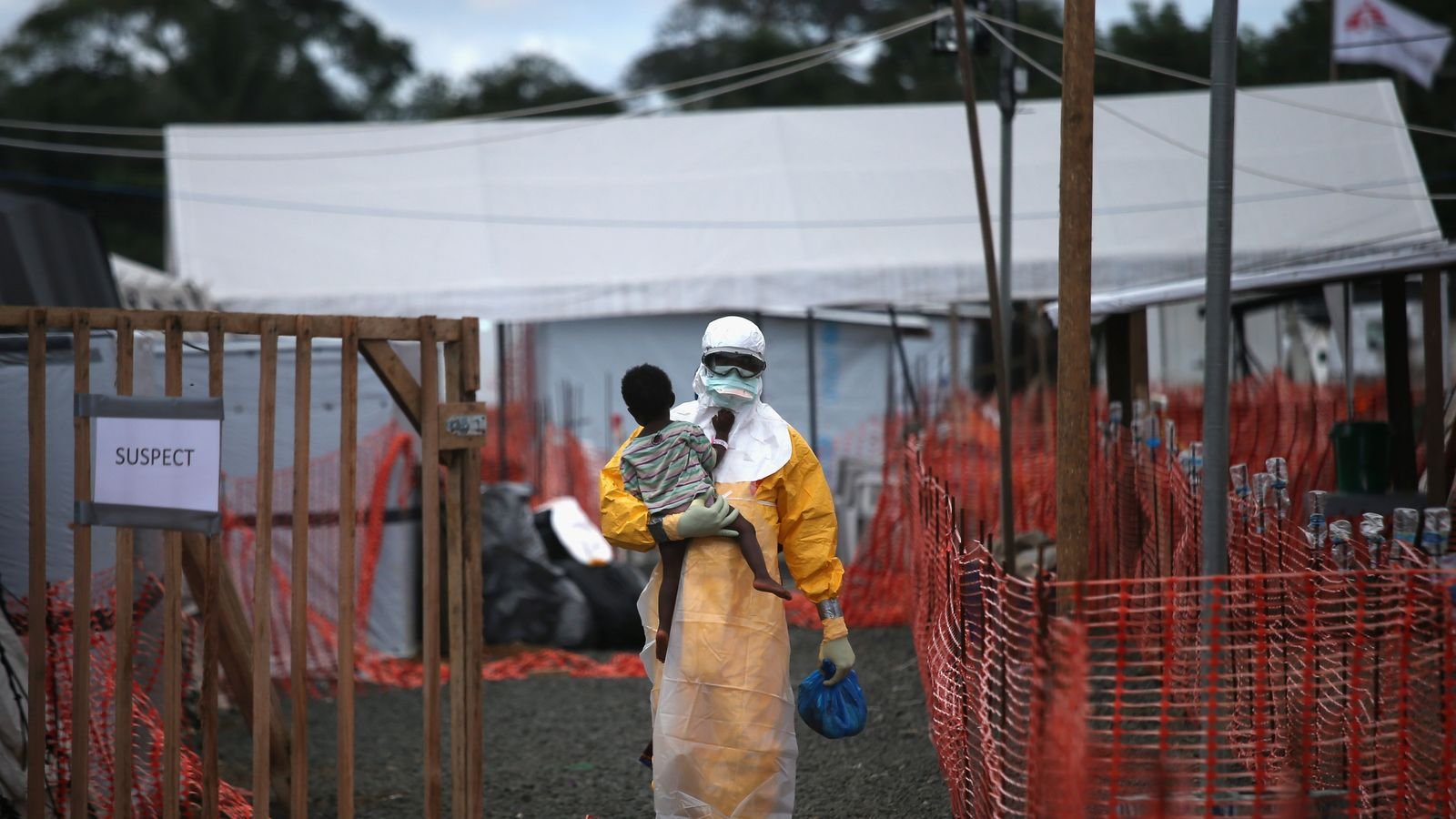
The outbreak, now the 17th in DRC since 1976, has expanded from its original epicenter in Ituri Province, northeastern DRC, to North Kivu and South Kivu provinces, with nine confirmed cases in Kampala. Doctors Without Borders published its emergency assessment on May 29, confirming a large-scale response mobilizing medical, logistical, and support teams alongside essential supplies. MSF emphasized that the real extent of the outbreak remains unknown because diagnostic capacity in the affected areas is limited and reporting from remote, conflict-affected health zones is almost certainly incomplete.
The DRC Ministry of Health confirmed on May 28 that 125 cases are laboratory-confirmed, including 17 deaths, with 906 additional suspected cases and 223 suspected deaths. The confirmed and suspected figures reflect a data revision that removed non-cases and reclassified some cases, providing greater precision without reducing the overall trajectory of the outbreak’s growth. WHO Director-General Tedros Adhanom Ghebreyesus has repeatedly warned of what he calls a catastrophic collision of disease and conflict in Ituri Province, where decades of armed insecurity have left healthcare infrastructure fragmented and communities deeply distrustful of outside responders.
The Bundibugyo strain creates a clinical reality that distinguishes this outbreak from the better-publicized Ebola crises of 2014 and the subsequent DRC outbreaks. The vaccines and therapeutics developed after 2014 target the Zaire ebolavirus. The Bundibugyo strain does not respond to those interventions. No approved vaccine or specific treatment exists for Bundibugyo virus disease. Case fatality rates in the two previous Bundibugyo outbreaks ranged from 30 to 50 percent. Without targeted medical countermeasures, the tools available to health workers are early detection, isolation, high-quality supportive care, and contact tracing, all of which are difficult to execute effectively in the operating environment Ituri presents.
Africa CDC’s Public Health Emergency of Continental Security declaration, issued on May 18, activated the African Union’s highest-level emergency response mechanisms and identified ten additional African countries at risk of receiving imported cases. The countries identified span a geographic arc from the Horn of Africa through East and Central Africa, connected to DRC and Uganda through the air and road networks that normally facilitate trade, labor migration, and family travel. Tanzania, Rwanda, Kenya, the Central African Republic, the Republic of Congo, Burundi, Sudan, South Sudan, Ethiopia, and Mozambique are among those monitoring cross-border movement with heightened urgency.
Kenya’s involvement took a legal dimension this week when a Kenyan court issued a ruling on May 29 halting a U.S. plan to open a 50-bed Ebola treatment facility in Nairobi. The decision reflects the complex politics of Ebola response in urban African settings, where community anxiety about facility proximity often overrides the public health case for local treatment capacity. Managing community perceptions while building the regional treatment infrastructure needed to contain a cross-border outbreak is one of the most persistently difficult challenges in Ebola response.
The international financial response has been significant in scale if not yet fully coordinated. The United States CDC has mobilized resources through long-standing partnerships with DRC and Uganda health ministries, supporting laboratory systems, field epidemiology, supply chains, and coordination. The World Bank activated emergency disease response financing mechanisms. The African Development Bank, which held its Annual Meetings in Brazzaville, Republic of Congo, this week under the theme of mobilizing development finance in a fragmented world, identified the Ebola outbreak as a priority financing challenge for member states.
For Ugandan communities near the DRC border, the border closure creates immediate economic hardship. Tens of thousands of people on both sides of the Uganda-DRC border depend on cross-border trade for their livelihoods. Farmers bring produce to market, traders move goods, families cross to visit relatives, and workers commute across what has always been a porous and commercially active frontier. A hard border closure disrupts all of that and imposes costs on some of the poorest communities in both countries.
Read More: Nigeria’s Dangote Refinery Takes Government to Court Over Petrol Import Licences in Battle That Will Define Africa’s Energy Future
The African context for this outbreak is important to understand fully. The DRC has experienced 17 Ebola outbreaks since 1976, more than any other country on Earth. Each outbreak strains a health system that never fully recovers between episodes. The country simultaneously manages the Ebola crisis while dealing with ongoing armed conflict involving multiple non-state armed groups, a massive internal displacement crisis with millions of people living in camps, cholera, measles, malaria, malnutrition, and the global energy price shock that is driving up fuel and food costs across the region.
That is the context in which MSF teams, WHO staff, Africa CDC responders, and DRC and Uganda health ministry workers are trying to contain a deadly disease that spreads rapidly, kills one in three to one in two people it infects without medical intervention, and for which no vaccine or treatment has been approved. The world has contained Ebola before under similarly difficult conditions. The DRC health system and its international partners have demonstrated genuine capacity built from hard experience. The question now is whether that capacity is sufficient at the scale and speed this outbreak demands.


