
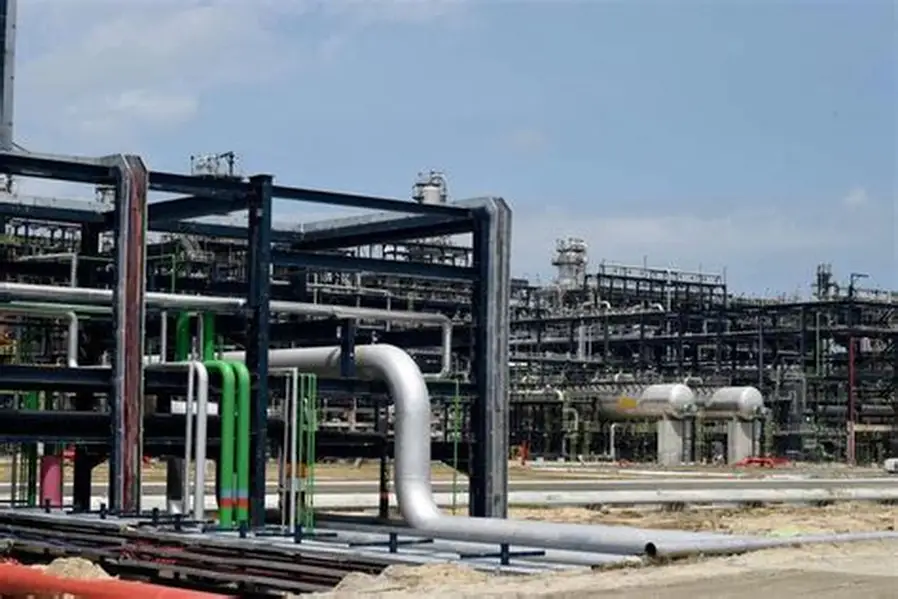
Nigeria’s is making the boldest bet in its post-oil era history. Within the space of a single week, the Nigerian National Petroleum Company signed a landmark MOU with Chinese firms to restart the long-dormant Port Harcourt and Warri refineries, while Aliko Dangote announced plans for a pan-African stock listing that could unlock up to $25 billion in dividends for African investors. Together, these two moves signal a fundamental transformation in how Africa’s most populous nation intends to manage its energy future.
The NNPC-China MOU targets two of Nigeria’s most strategically important but historically underperforming refineries. Port Harcourt and Warri represent installed capacity that Nigeria has failed to utilize for decades, forcing the country to import refined petroleum products from Europe and Asia while sitting on some of the world’s largest proven crude oil reserves. If the Chinese partnership delivers operationally, it would reduce Nigeria’s crippling fuel import bill, stabilize pump prices, and generate refining jobs in the Niger Delta region, where economic frustration has historically fueled instability.
The timing is critical. The global energy crisis triggered by Iran’s closure of the Strait of Hormuz has exposed every oil-importing nation’s vulnerability in sharp relief. Nigeria, which exports crude but imports refined products, sits in a peculiar double exposure: it benefits from higher global crude prices but pays more for imported fuel. Domestic refining capacity is the structural solution that previous administrations consistently promised and consistently failed to deliver.
The Dangote Refinery adds a private-sector dimension to this story that Nigerian governments never previously managed. During a CNBC Africa broadcast that shifted investor calculations, Dangote revealed three facts that reframed his refinery’s investment case entirely. First, the facility was tested at 661,000 barrels per day during commissioning, exceeding its nameplate capacity of 650,000 barrels. Second, he committed to up to $25 billion in dividends for African investors through the planned continental listing, with $20 billion as the primary figure. Third, he announced a 20,000-megawatt power generation programme that would more than double Nigeria’s current total installed electricity capacity of approximately 13,000 megawatts.
That power announcement fundamentally changes how investors and analysts should evaluate the Dangote enterprise. A refinery-plus-power-generation conglomerate operating at continental scale represents something Nigeria’s private sector has never produced before. It also places Dangote in direct conversation with Africa’s energy transition debate, where the continent’s need for economic development energy and its exposure to global climate finance pressures create a fundamental tension that no African leader has yet resolved cleanly.
Nigeria’s oil industry continues exporting approximately 80% of crude output despite growing domestic refining demand, according to recent sector data. That figure reflects both the contractual structure of upstream oil agreements and the persistent gap between Nigeria’s theoretical refining capacity and its actual operational reality. The NNPC-China deal and Dangote’s operational expansion represent a genuine attempt to close that gap, though execution risk remains substantial given Nigeria’s history with large infrastructure projects.
The African Development Bank’s approval of a $61 million package to support women-led businesses in Nigeria adds a complementary dimension to this energy-centered economic narrative. The program targets female entrepreneurs across manufacturing, services, and agriculture, sectors that will need to absorb workers as the energy transition reshapes Nigeria’s economy.
Read More: Africa Economic Outlook 2026: IMF Projects 5 African Economies Growing at 7 Percent or More as Continent Defies Global Slowdown
For the continent as a whole, Nigeria’s energy pivot carries signaling value beyond its borders. West Africa’s economic anchor making credible commitments to domestic refining and power generation gives smaller regional economies a model to reference and potentially a regional supply chain to integrate with.
The execution challenge is real and cannot be overstated. Nigeria has announced refinery restarts before. Chinese partnerships in African infrastructure have delivered mixed results across the continent. Dangote’s power generation timeline remains vague. But the scale of ambition, the convergence of public and private initiative, and the urgency created by the global energy crisis combine to make this moment genuinely different from previous false starts.
Africa’s energy future is being written in Nigeria right now.


