
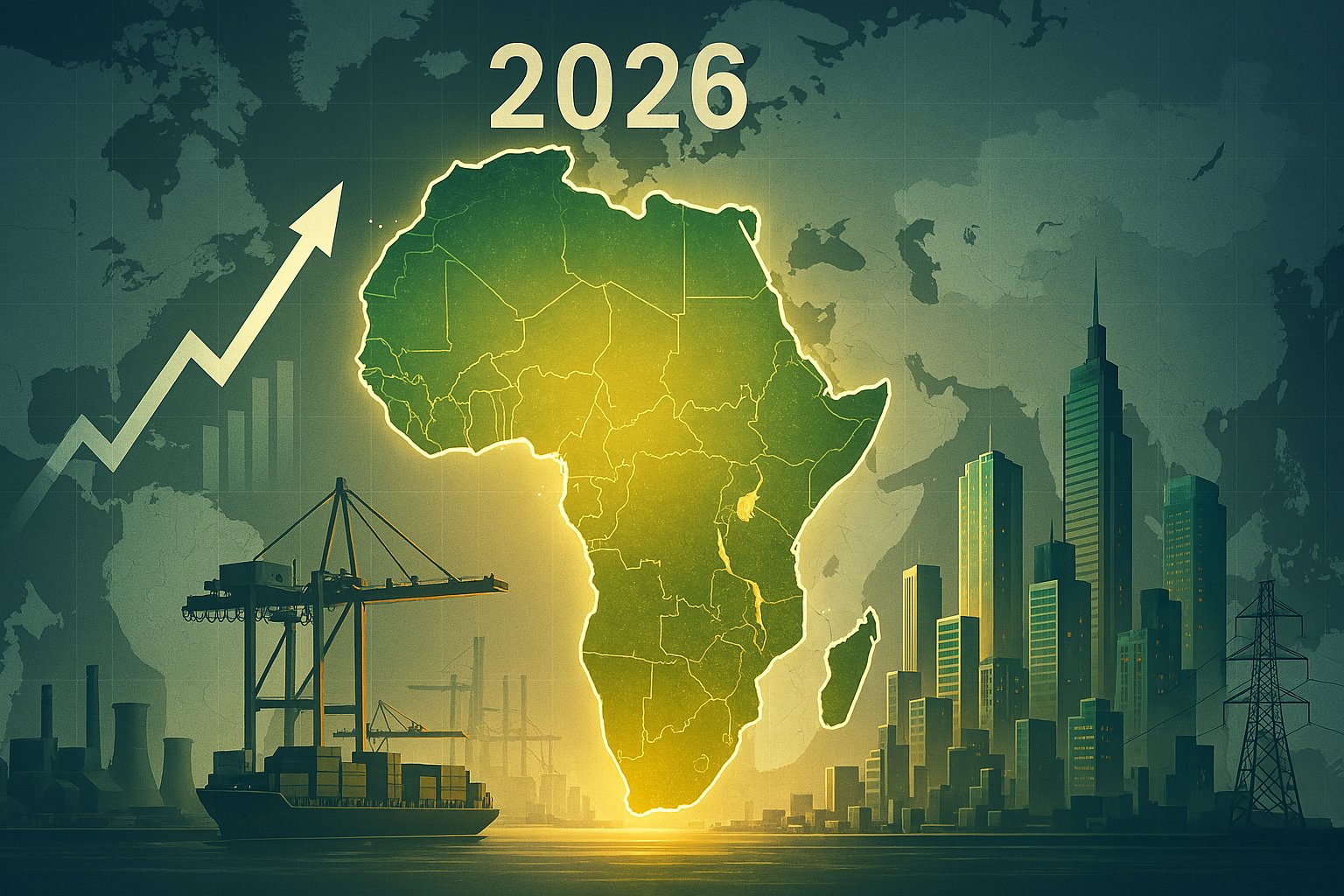
Africa is delivering some of the world’s strongest economic growth in 2026, with the International Monetary Fund projecting that five African economies will expand by 7 percent or more this year, even as global growth slows and energy markets face historic turbulence. The numbers challenge the simplistic narrative of African economic fragility and point instead to a more complex and diverse picture of a continent writing its own development story.
Ethiopia leads Africa’s fastest-growing economies with a projected GDP growth rate of 9.2 percent in 2026. The expansion reflects heavy public investment, growth in the services sector, expansion of industrial parks, and the leverage that comes from having one of the world’s largest domestic markets. The country continues to face inflation, foreign exchange shortages, and debt pressure, but its scale and diversification keep it at the top of Africa’s growth table despite those headwinds.
Guinea follows at 8.7 percent growth, powered by its massive bauxite reserves, the key input for aluminum production. Surging global demand for aluminum, driven by energy infrastructure, construction, and electric vehicle manufacturing, is attracting sustained investment into Guinea’s mining sector. The critical question remains whether mining revenue can translate into roads, power, schools, and jobs that benefit communities beyond the extractive footprint.
Uganda rounds out the high-growth leaders as it brings new oil production online, while Rwanda continues to demonstrate that services, governance quality, and strategic positioning for foreign capital can drive growth even without significant natural resource endowments. Benin rounds out the group, growing through trade reforms and deeper integration with West African markets.
The UN Office of the Special Adviser on Africa notes that African growth is expected to remain resilient despite significant headwinds including declining official development assistance, rising global trade barriers, and the uncertain environment created by US tariff policies and the future of the African Growth and Opportunity Act. East Africa as a region is expected to achieve 5.8 percent growth, the highest of any African sub-region, driven by Ethiopia and Kenya and supported by regional integration and renewable energy expansion.
However, the broader picture carries important warnings. Africa’s average public debt-to-GDP ratio has reached 63 percent, with interest payments consuming nearly 15 percent of public revenue. Roughly 40 percent of African countries are either in debt distress or at high risk of becoming so, and several are pursuing restructuring under the G20’s Common Framework. High debt servicing costs are squeezing the fiscal space governments need to invest in education, healthcare, and infrastructure, limiting how broadly the growth benefits spread to ordinary citizens.
Read More: Africa Oil and Gas 2026: New Report Reveals Decades of Extraction Have Failed African People While Iran War Creates New Winners and Losers
The Iran war’s oil price shock is hitting Africa’s most vulnerable nations hard. Countries that lack domestic oil production and depend on fuel imports are watching their current account deficits widen, their currencies come under pressure, and their inflation rates climb. The World Bank and IMF are both engaged in emergency support discussions with several African governments.
Still, the underlying growth story is more resilient than global headlines suggest. Ethiopia, Guinea, Uganda, Rwanda, and Benin prove that African economies are growing through different engines, from minerals to manufacturing to services to trade reform. That diversity itself is a form of economic strength. The next phase will determine whether this growth creates broad-based prosperity or simply concentrates gains at the top.


