
BREAKING NEWS DESK | INTERNATIONAL BUREAU | JUNE 7, 2026
Africa economic momentum faces its most serious external test in years as the African Development Bank warned this week that the continent’s growth will slow to 4.2 percent in 2026, pulled down by the cascading effects of the Middle East conflict, surging global energy prices, and a shrinking pool of development financing available from international partners navigating their own fiscal pressures.
The warning came during the release of the 2026 African Economic Outlook at the AfDB Annual Meetings in Brazzaville, Republic of Congo, where African finance ministers, central bank governors, and development partners gathered to assess the continent’s prospects in what Bank President Dr. Sidi Ould Tah described as an “important moment when the world is changing, not always in favour of the African continent.”
The flagship report, published under the theme Mobilizing Africa’s Development Financing at Scale in a Fragmented World, paints a picture of a continent that entered 2026 with genuine economic strength but now faces headwinds it cannot fully control. Africa’s real GDP grew 4.4 percent in 2025, well above the global average of 3.1 percent, driven by improved macroeconomic management across key economies, stronger agricultural output, elevated commodity export prices, and structural reforms that attracted foreign direct investment. FDI into Africa surged more than 75 percent in 2024, reaching $97 billion, while remittances climbed 14 percent to $104.6 billion, overtaking foreign portfolio investment to become the continent’s largest source of external non-debt financing.
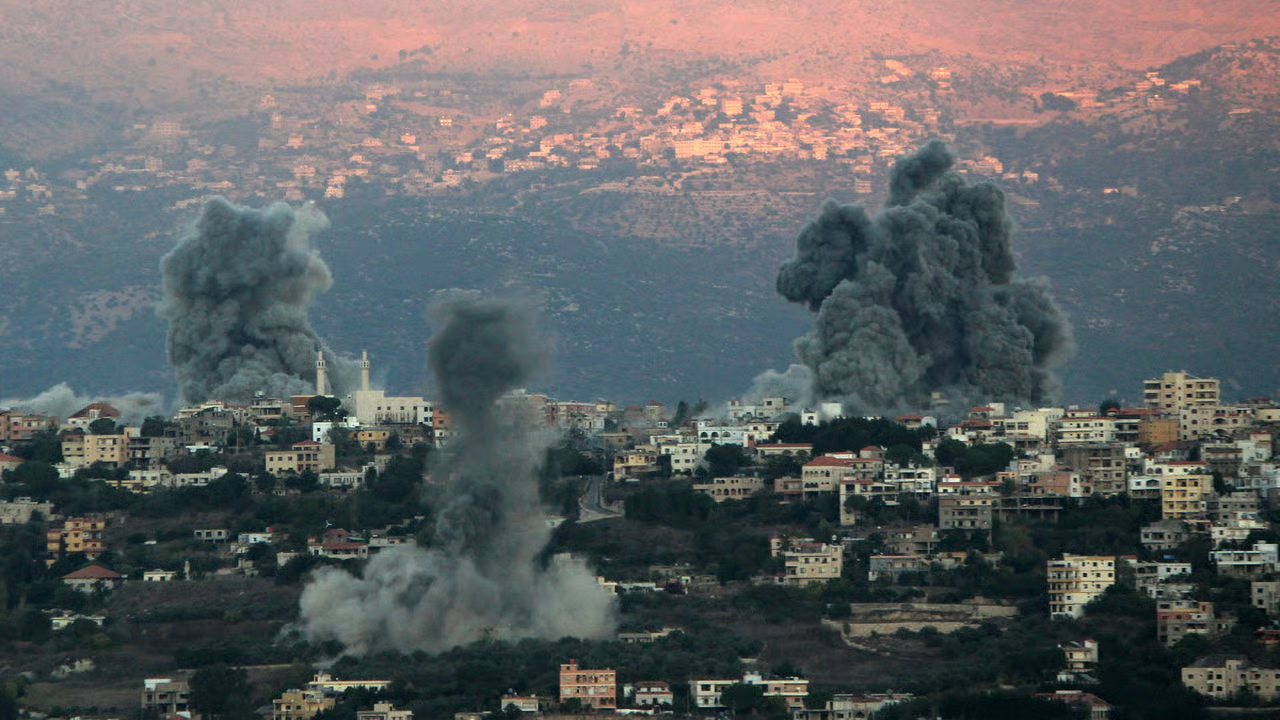
Those gains now come under pressure from forces originating thousands of kilometers away. The near-total disruption of tanker traffic through the Strait of Hormuz since late February 2026 has driven global oil prices sharply higher, increasing fuel and fertilizer import bills across a continent where most countries remain net energy importers. The AfDB estimates that if the Middle East conflict extends beyond three months, it could shave 0.2 percentage points off Africa’s economic growth rate in 2026 alone, a modest-sounding figure that translates into millions of people missing the threshold between poverty and economic participation.
Average inflation across Africa is projected to reach 10.4 percent in 2026, driven mainly by higher global oil and gas prices. While that level represents a significant improvement from the 21.8 percent average recorded in 2024, it remains high enough to erode purchasing power, destabilize household budgets, and complicate monetary policy for central banks still working to rebuild credibility after the post-pandemic inflation surge.
Regional performance varies sharply. East Africa remains the continent’s fastest-growing region, though its pace slips from 6.6 percent in 2025 to 5.9 percent in 2026 as logistics disruptions and higher energy costs bite into output across economies that trade heavily through Red Sea and Indian Ocean routes. Central Africa, backed by sustained commodity prices and particularly oil revenues, maintains 3.8 percent growth. Southern Africa sits at the bottom of the regional table, with growth limited to just 2.1 percent because of weaker mining output, agricultural challenges, and the economic spillover from global supply chain disruptions.
Read More: Africa’s $96 Billion Debt Crisis Reaches Breaking Point as Rising Oil Prices, Trade Shocks, and Development Finance Failures Threaten the Continent’s Growth Story
The development financing landscape compounds the challenge. The AfDB report notes that declining international aid flows, potential pressure on migrant remittances if key host economies slow down, and rising risk premiums on African sovereign bonds all threaten the investment pipeline that African governments need to build infrastructure, expand power generation, and create the jobs that a fast-growing population requires.
African finance ministers at Brazzaville called for a decisive shift away from dependence on external financing toward domestic resource mobilization, deeper integration of African financial markets, and stronger application of AfCFTA frameworks that could boost intra-African trade. The Bank itself pledged to accelerate financing for energy transition projects, digital infrastructure, and climate adaptation, recognizing that the window for establishing sustainable growth foundations is narrowing as global conditions become less hospitable.


