
May 17, 2026 | West Africa | Security | Terrorism | Sahel
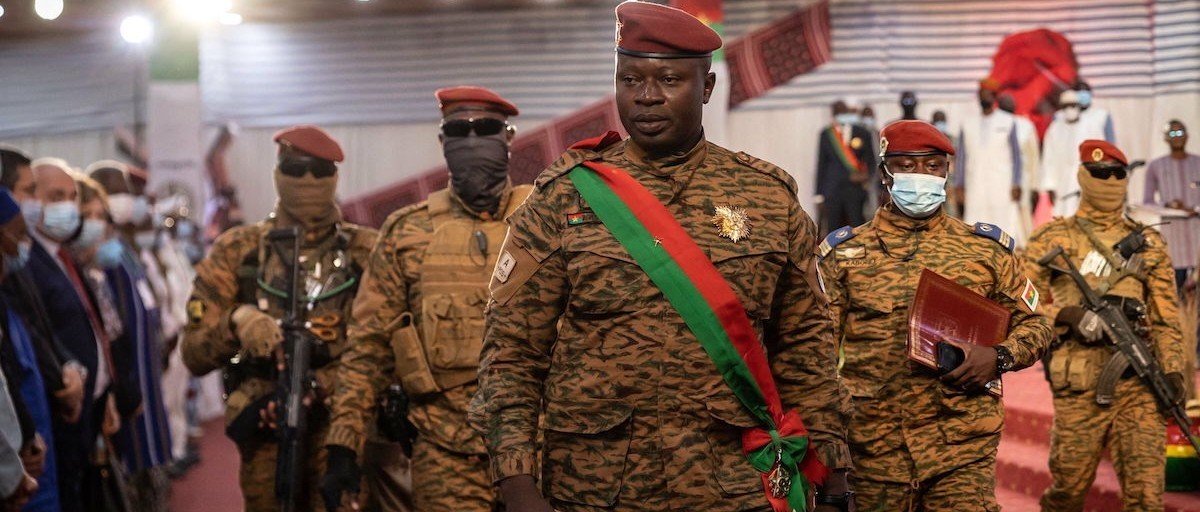
The security situation across West Africa’s Sahel region is deteriorating at an accelerating pace, as military governments in Mali, Burkina Faso, and Niger that seized power promising to defeat jihadist insurgencies have instead presided over worsening violence, deeper civilian suffering, and an expanding geographic footprint for terrorist groups. The killing of ISIS global deputy Abu-Bilal al-Minuki by U.S. and Nigerian forces this week underscores both the scale of the threat and the limits of existing counterterrorism approaches.
Chatham House’s authoritative 2026 Africa outlook describes a pattern of regime survival prioritized over genuine security reform across all three Sahel juntas. Each government has pursued transactional security partnerships with Russia’s Africa Corps, replacing French and Western military presences. Yet violence metrics in all three countries have worsened, not improved, since the coups that brought these governments to power.
Abu-Bilal al-Minuki, the ISIS second-in-command eliminated in the U.S.-Nigeria joint operation, served as the primary operational link between ISIS central command and its African affiliates. His base of operations reflected the way terrorist groups have exploited governance vacuums across the Sahel and the Lake Chad Basin. The announcement of his death by President Trump highlighted that West Africa had become a front line in the global ISIS campaign under his direction.
Nigeria occupies a pivotal position in this landscape. As Africa’s most populous country and its largest economy, Nigeria’s capacity to maintain a functioning counterterrorism partnership with the United States gives it outsized influence over the regional security calculus. The successful joint operation that eliminated al-Minuki reinforces the argument that capable, legitimate partner nations can achieve results that proxy forces and transactional security arrangements cannot.
But Nigeria faces its own severe pressures. The Boko Haram and ISWAP insurgencies in the northeast continue to displace millions and constrain economic activity in some of the country’s most vulnerable regions. The energy crisis triggered by the Strait of Hormuz closure has elevated fuel prices domestically, squeezing a population already contending with significant inflation and cost-of-living pressures.
Somalia’s 2026 electoral timetable is under severe pressure. No agreed electoral model exists, and two key federal states have suspended relations with Mogadishu, threatening the political cohesion of a country that has been attempting to rebuild its governance architecture for years. Ethiopia’s June election, meanwhile, is expected to see Prime Minister Abiy Ahmed’s Prosperity Party win comfortably as key opposition groups boycott and voting is unlikely in multiple contested areas including Tigray.
Zambia heads to the polls in August against a backdrop of slow economic reform. South Africa’s local elections will offer the first real test of national sentiment since the Government of National Unity formed in 2024, testing whether the country’s recent political realignment represents a durable shift in voter behavior.
Read More: South Africa’s Unemployment Crisis Hits 32.7 Percent as Johannesburg Faces Financial Collapse and Ramaphosa Confronts Impeachment
The broader pattern across West and Central Africa reflects a continent in which governance failures, resource mismanagement, and external interference have created conditions highly conducive to extremist recruitment. Youth unemployment, food insecurity driven partly by global commodity price shocks, and the absence of credible state services all feed the cycle.
The death of Abu-Bilal al-Minuki will not resolve these structural conditions. But it demonstrates that credible counterterrorism cooperation between African governments and Western partners remains both possible and consequential. Building more of that capacity, at scale, is the work that will ultimately determine whether West Africa’s security crisis stabilizes or spreads further south and east.


