
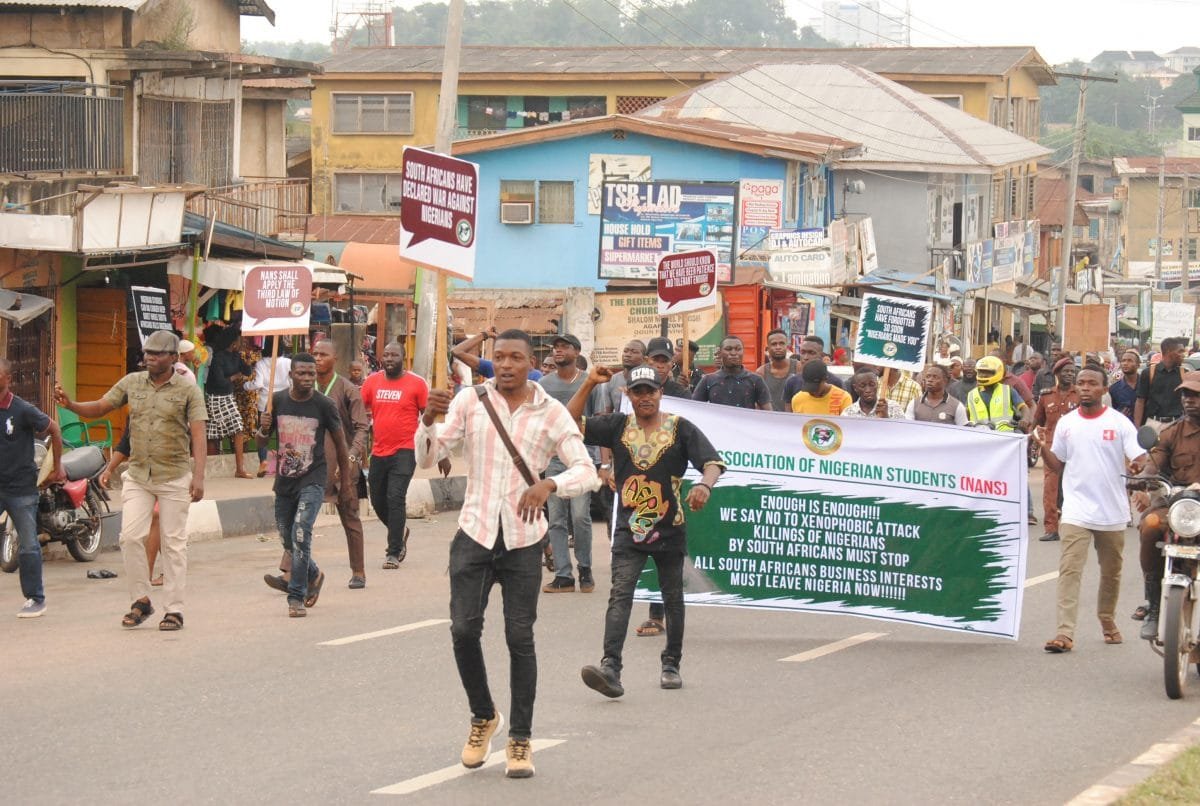
Africa’s most economically powerful nation and the continent’s most industrially developed economy are locked in a bitter diplomatic confrontation that now tests the foundations of African continental unity. The renewed wave of xenophobic violence targeting Nigerian, Ghanaian, Zimbabwean, Mozambican, and other African nationals in South Africa has generated a continent-wide reaction that goes far beyond the diplomatic norm, with Nigeria threatening economic retaliation, Ghana pushing the African Union for formal action, and multiple African governments warning citizens to remain indoors in South African cities.
The violence has been sustained, organized, and deadly in its impact on livelihoods. Groups like Operation Dudula have carried out systematic campaigns against foreign nationals, preventing some from accessing hospitals and public facilities. Nigerian businesses built over years of hard work have been destroyed. At least 130 Nigerian citizens formally requested evacuation through Nigerian government channels this week, a figure that represents only those who have approached official services. Civil society organizations marched in Durban on May 6, demanding that the South African government take concrete protective action for foreign nationals.
Nigeria’s response intensified this week when Senator Adams Oshiomhole proposed revoking operational licenses of South African companies doing business in Nigeria. The threat carries real economic weight. South Africa’s MultiChoice, which operates the dominant DSTV pay-television service across Africa, generates revenue increasingly dependent on its Nigerian subscriber base as its home market contracts due to competition from streaming services. Canal+, which acquired MultiChoice at the end of 2025, is already implementing a Voluntary Severance Plan and struggling with revenue that fell from 657 million euros in Q1 2025 to 617 million euros in Q1 2026. A Nigerian license revocation would devastate the company’s Africa-wide strategy at its most vulnerable moment.
South Africa’s government, under President Cyril Ramaphosa, rejected characterizations of the country as systematically xenophobic, insisting that the violence does not represent state policy and that security forces are responding. Mozambique’s government, after its president met Ramaphosa in Pretoria this week, stated that no Mozambican nationals had been confirmed killed or injured in the incidents. However, neighboring countries including Kenya, Malawi, Lesotho, and Zimbabwe issued formal warnings to their citizens, a striking display of collective concern from governments that rarely coordinate public advisories.
The regional economic response is also taking shape. Mozambique’s Foreign Affairs Minister announced this week that Mozambique, South Africa, and Eswatini are moving toward creating a special economic zone at their joint border, designed to generate employment and reduce the economic desperation that drives migration. The initiative addresses a root cause that pure policing cannot. South Africa carries a 33 percent official unemployment rate, exceeding 45 percent among young Black South Africans. That economic reality creates the conditions for scapegoating regardless of which political party holds power.
The African Union’s response has been measured to the point of inadequacy. Pan-African rhetoric about continental integration and the AfCFTA becomes hollow when Africans cannot safely move between African countries without fearing violence. Ghana pushed for AU action this week, but concrete mechanisms and enforcement powers within the AU remain weak. The organization that negotiated the world’s largest free trade area cannot yet guarantee that traders crossing African borders will return home alive.
Read More: Kenya Set to Join Africa’s Oil Producers Club as London Court Freezes Assets of Nigerian Oil Trader in $40 Million Dispute
South Africa’s constitutional court added another dimension of instability to an already volatile situation by ordering parliament to reconsider a report connected to the Phala Phala farm money scandal involving President Ramaphosa. The ruling reopens the possibility of impeachment proceedings against a president who needs to present a stable, decisive face during a bilateral crisis. A politically weakened Ramaphosa makes the diplomatic solution harder, not easier.
Africa cannot preach continental solidarity while its citizens are hunted on African streets. The leaders gathered in AU chambers understand this. So do the ordinary Nigerians, Zimbabweans, and Mozambicans who fled their countries for economic opportunity and now fear for their lives in the country that once symbolized the continent’s hope.


