
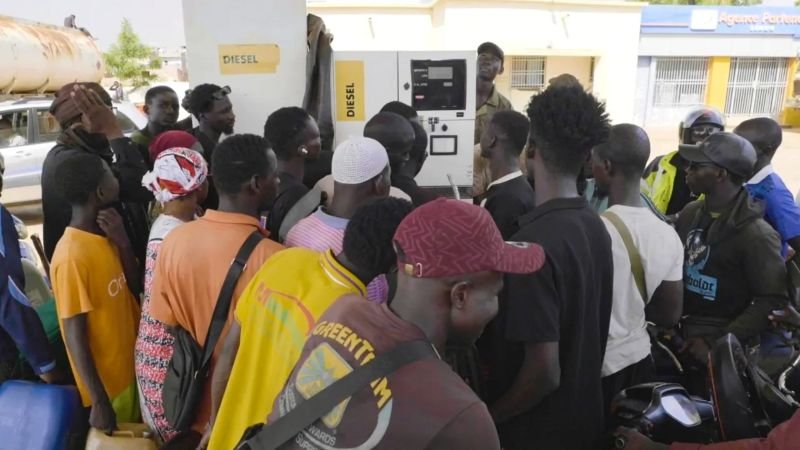
The Malian government has announced the closure of all schools and universities across the country as a severe fuel shortage cripples transportation and public services. The crisis, triggered by a blockade on fuel imports imposed by al-Qaida-linked militants, has brought daily life in the capital Bamako and other regions to a near standstill.
Education Minister Amadou Sy Savane announced the nationwide shutdown on state television, saying classes would be suspended for two weeks due to widespread disruptions in fuel supply that have affected teachers, students, and school transportation.
“The movement of school staff and the operation of institutions have become impossible,” Minister Savane said. “We are doing everything possible to restore normal fuel supplies before schools resume on November 10.”
The closure underscores the worsening impact of Mali’s ongoing security crisis, which has escalated in recent months following increased attacks by Islamist insurgents across the northern and central regions.
Militants from the al-Qaida-affiliated Jama’at Nusrat al-Islam wal-Muslimin (JNIM) announced a ban on fuel imports from neighboring countries in early September, effectively strangling Mali’s already fragile economy.
The blockade has left hundreds of fuel trucks stranded along the borders with Côte d’Ivoire, Senegal, and Mauritania. Drivers say they have been unable to cross into Mali due to militant threats and attacks on transport convoys.
In Bamako, fuel scarcity has led to long queues stretching for kilometers at petrol stations. Prices of basic goods and public transportation fares have surged dramatically, worsening the hardship faced by millions of Malians.
Residents say some motorists are now resorting to the black market, where prices have tripled in just two weeks. “We spend hours in line only to find that fuel is finished,” said Mamadou Diarra, a taxi driver in Bamako. “If the government does not solve this soon, we cannot work or feed our families.”
Mali, a landlocked nation heavily dependent on imported fuel, has been hit hard by the militant blockade. The crisis is the latest in a string of economic shocks that have followed the country’s 2020 military coup.
The ruling junta, led by Colonel Assimi Goita, came to power after toppling the civilian government, promising to restore security and end the years-long insurgency that has destabilized the Sahel region.
However, despite the junta’s alliance with Russian mercenary forces from the Wagner Group, attacks by Islamist groups have persisted, targeting military convoys, civilians, and supply routes.
Security analysts told The Africa Standard that the blockade demonstrates the militants’ growing ability to disrupt the country’s logistics and economy without directly engaging in combat.
“This is a calculated move to pressure the government by cutting off essential supplies,” said Sahel security analyst Fatouma Konaté. “By choking fuel imports, the militants are effectively weaponizing the economy.”
Government officials have confirmed that the military has launched several operations to escort stranded fuel trucks from the borders into Bamako. Some convoys successfully arrived, but others were ambushed along the way.
Authorities have appealed for calm, saying efforts are underway to secure alternative fuel routes and negotiate humanitarian corridors for essential supplies.
The crisis has also disrupted the transportation of food and medical goods, creating fears of inflation and shortages in major cities. Markets in Bamako, Mopti, and Kayes have reported a sharp increase in food prices over the past week.
Parents’ associations have expressed concern that the school closures could affect national examinations and further delay the academic calendar already disrupted by past political unrest.
“We understand the gravity of the situation, but our children’s education keeps suffering,” said Aissata Traoré, a mother of three in Bamako. “First it was COVID, then the coup, and now fuel. We are losing entire school years.”
International observers say the crisis highlights the vulnerability of Mali’s economy to insurgent activity and political instability. The United Nations has called on the government to protect vital supply chains and ensure that civilian needs are prioritized.
Meanwhile, humanitarian organizations are warning of the potential for a broader crisis if fuel shortages continue into November. Aid deliveries to conflict-affected northern regions have already slowed down drastically.
“The fuel crisis is threatening our ability to reach displaced populations,” said an aid coordinator with a local NGO. “Without fuel, our trucks cannot move food, medicine, or water to areas in need.”
The junta has maintained that it remains in full control of the situation and accused “foreign-backed groups” of attempting to destabilize the country. Officials have not indicated whether negotiations with the militants are taking place.
Despite the government’s assurances, frustration continues to grow among citizens who face rising prices and limited mobility. Several civil society organizations have called for peaceful protests demanding swift government action.
The education minister reiterated that the government’s priority is to resolve the fuel crisis quickly so that schools can reopen as planned. “Education must continue, but safety and access must come first,” Savane said.
As Mali’s fuel crisis deepens, the suspension of education nationwide symbolizes the far-reaching effects of the country’s ongoing conflict. For many families, the immediate question is not only when schools will reopen, but whether daily life will return to normal anytime soon.


