
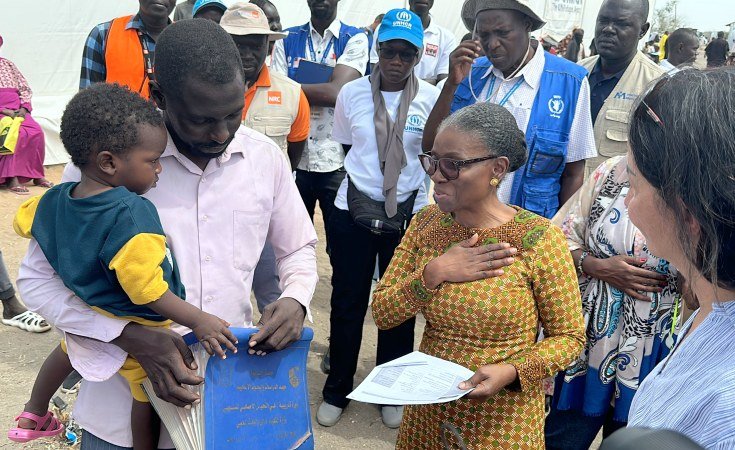
More than a decade after civil war tore through South Sudan, the country is at a turning point. The temporary shelters that once saved lives during the height of violence have become home to hundreds of thousands of people trapped in limbo, waiting for a future that has yet to arrive.
When the conflict erupted in 2013, the United Nations moved swiftly to protect civilians. Protection of Civilians (PoC) sites were established on UN bases across the country, providing sanctuary from killings, looting, and ethnic attacks. These sites evolved into what are now known as internally displaced persons (IDP) camps.
At the time, the decision saved countless lives. But more than ten years later, for many of those who fled, temporary safety has turned into a long-term struggle for survival.
“Camps were never meant to be permanent,” says a humanitarian official in Juba. “They were built to save lives, not to sustain them indefinitely.”
Today, hundreds of thousands of South Sudanese remain displaced, dependent on shrinking humanitarian aid. Many have lived in these camps since the first days of the conflict, unable to return to their homes because of lingering insecurity, lack of land, and political instability.
The United Nations estimates that nearly two million people remain internally displaced in South Sudan. Another two million have fled abroad, mostly to Sudan, Uganda, and Kenya.
For those still in the camps, the challenges are mounting. Access to food, clean water, and healthcare is deteriorating as global funding for humanitarian operations declines.
“People are losing hope,” says a displaced mother in Bentiu camp. “We have been here for years. We want to go home, but we don’t know what we will find there.”
The government of South Sudan and its partners now face a delicate balancing act: protecting lives while helping people rebuild them outside the camps.
International agencies, including the United Nations Mission in South Sudan (UNMISS) and the UN Development Programme (UNDP), are working with local authorities to develop long-term solutions.
In Bentiu, Malakal, and Wau, pilot projects are helping families gain access to land, rebuild homes, and re-establish livelihoods. Community-driven initiatives are restoring trust among once-divided groups.
Efforts are also underway to strengthen the rule of law, improve basic services such as education and healthcare, and create economic opportunities through vocational training and small business support.
“These are the foundations of recovery,” says a UN official overseeing reintegration projects. “Without jobs, security, and basic services, returns will not be sustainable.”
Local peace dialogues are playing a key role in rebuilding social cohesion. In Malakal, youth groups and traditional leaders have been meeting regularly to discuss how communities can live together peacefully again.
“Peace cannot come from outside,” says a youth leader involved in the talks. “It must be built by the people who suffered the most.”
The United Nations and its partners are aligning their strategies with the government’s national plan for durable solutions, ensuring that international aid supports long-term recovery instead of short-term relief.
The UN Secretary-General’s Action Agenda on Internal Displacement provides a blueprint for this shift. It emphasizes collaboration between humanitarian and development actors to move displaced people from dependence to resilience.
South Sudan’s Vice President for Gender and Youth, Rebecca Nyandeng, recently said that “ending displacement is not only about returning home, it is about restoring dignity and opportunity.”
Experts warn that failing to act now could have serious consequences. Prolonged displacement risks creating another generation without education or stable livelihoods.
“The danger is that we normalize life in camps,” says a senior South Sudanese official. “That cannot be our legacy.”
Instead, advocates are calling for a bold transition from emergency relief to recovery and development, anchored in national ownership and community participation.
“The world came together to save lives in South Sudan,” says a UN humanitarian coordinator. “Now we must come together to rebuild them.”
The path forward will not be easy. Decades of conflict have left deep scars, and peace remains fragile. Yet the resilience of South Sudan’s people offers hope.
“South Sudan can show the world what recovery looks like when it is locally driven and globally supported,” says the coordinator.
If successful, the country could become a model for how nations emerge from years of conflict and displacement with dignity, stability, and peace at the center of their rebuilding process.
For the millions still waiting to return home, that vision cannot come soon enough.


