
The International Monetary Fund has commended Zimbabwe for its disciplined monetary and fiscal policies, crediting the government’s reforms for curbing inflation, stabilising the exchange rate, and improving economic performance.
The endorsement came from Mr Abebe Aemro Selassie, Director of the IMF’s African Department, during the presentation of the Regional Economic Outlook for Sub-Saharan Africa at the IMF-World Bank Annual Spring Meetings in Washington DC this week.
Selassie praised Zimbabwe’s progress despite the absence of concessional financing that most African economies rely on to cushion external shocks.
“Zimbabwe has gone through quite a lot of challenges in recent years,” Selassie told journalists. “One of the things that distinguishes Zimbabwe from others in the region is that they have not had access to concessional financing, yet they have implemented the right policies under difficult circumstances.”
He said the “diminished recourse” to Reserve Bank of Zimbabwe (RBZ) financing had been crucial in restoring macroeconomic stability in an economy once plagued by hyperinflation and currency volatility.
“Recourse to central bank financing has diminished quite a bit,” Selassie said. “It will be important to sustain that because repeated reliance on central bank funds has caused problems in the past, including inflation and exchange rate instability.”
He applauded the government’s recent policy consistency and urged continued fiscal prudence to consolidate economic gains.
The IMF’s recognition follows a series of monetary and structural reforms initiated by RBZ Governor Dr John Mushayavanhu, who took office in early 2024.
In his first Monetary Policy Statement presented on April 5, 2024, Dr Mushayavanhu vowed to eliminate quasi-fiscal activities from the central bank’s operations.
“I don’t believe in quasi-fiscal activities; it’s not going to happen under my watch,” he said at the time. “My mandate as defined by the Reserve Bank Act is clear. I have no intention of doing other people’s jobs.”
He noted that past quasi-fiscal obligations, which had distorted monetary stability, were being phased out completely.
The RBZ has since focused on its core functions of monetary policy, exchange rate management, and inflation control.
In its third-quarter monetary snapshot released last week, the central bank reported steady progress toward macroeconomic stability. Inflation is projected to remain low and stable through 2025, anchored by a tight monetary policy stance.
“The central bank is operating well within its inflation target, with annual inflation expected to remain below 20 percent by December 2025, aligned with projected economic growth of 6 percent,” the report said.
It added that the ZiG monthly inflation rate averaged 0.5 percent between February and September 2025 and is forecast to stay below 3 percent for the remainder of the year.
Exchange rate stability has also been achieved, with the interbank rate oscillating around ZiG26.76 per US dollar during the third quarter.
“The parallel market premium has been narrowing towards convergence with the interbank rate,” the RBZ noted. “The remaining gap reflects transaction risks and search costs in informal forex markets.”
The IMF’s Article IV consultation released earlier this year also acknowledged Zimbabwe’s halt of quasi-fiscal operations and central bank financing as pivotal to the country’s newfound stability.
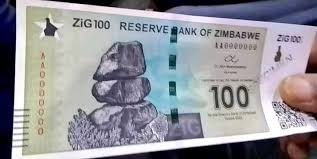
The introduction of the Zimbabwe Gold (ZiG) currency, backed by gold and foreign reserves, has played a key role in maintaining exchange rate stability.
Since its launch, the ZiG has steadily gained public confidence, with a growing share of domestic transactions now conducted in the local unit alongside the multi-currency system.
Currently trading at approximately ZiG26.71 per US dollar, the currency has remained largely stable since a controlled devaluation of 43 percent on September 27, 2024.
The IMF’s broader assessment of Sub-Saharan Africa showed regional resilience despite global economic headwinds, uneven commodity prices, and tightening global financial conditions.
The Fund projected Sub-Saharan Africa’s economic growth to hold at 4.1 percent in 2025, with a modest rise expected in 2026 as macroeconomic reforms deepen across key economies.
However, the IMF cautioned that risks remain high, citing overlapping fiscal, external, and financial vulnerabilities across the region.
To maintain progress, the Fund urged African governments to strengthen domestic revenue mobilisation, manage public debt prudently, and avoid excessive monetary expansion.
For Zimbabwe, analysts say the IMF’s positive assessment marks an important confidence boost as the country seeks debt relief and re-engagement with international lenders.
Economists argue that sustained discipline in monetary policy could further reduce inflation, attract foreign investment, and eventually open the door to concessional lending and balance-of-payments support.
“The IMF’s endorsement is a validation of Zimbabwe’s reforms,” said an independent Harare-based economist. “If these policies are maintained, Zimbabwe could finally move beyond its history of instability and re-establish creditworthiness on the global stage.”
President Emmerson Mnangagwa’s administration has maintained that macroeconomic stability remains central to Vision 2030, which seeks to transform Zimbabwe into an upper-middle-income economy within the decade.


