
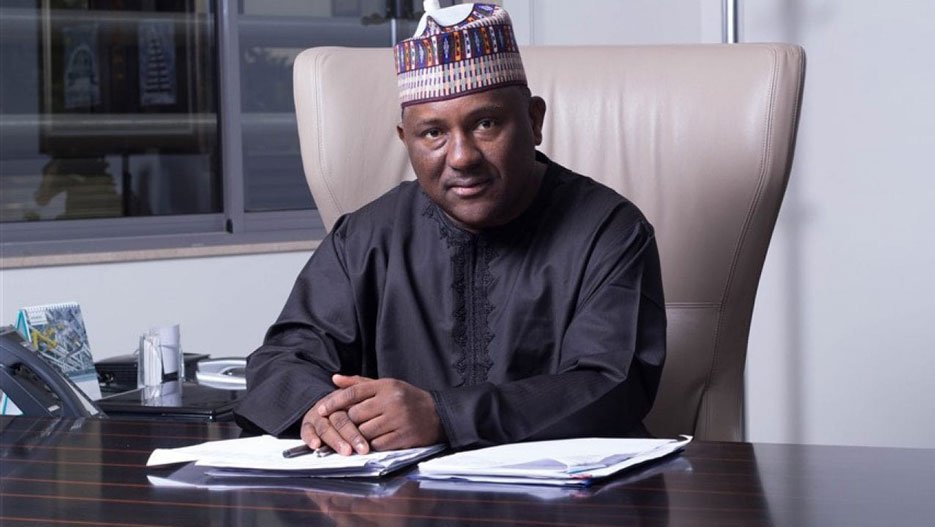
Nigerian billionaire industrialist Abdulsamad Rabiu has climbed to the position of the fourth richest man in Africa following a remarkable surge in his net worth, according to The Africa Standard.
As of Monday, October 27, 2025, Rabiu’s fortune reached a new high of $9.2 billion, marking an extraordinary increase of $4.2 billion from the $5.1 billion he held at the beginning of the year.
This new valuation places the BUA Group founder ahead of Egyptian billionaire Nassef Sawiris, who previously held the position as the fourth richest African.
Sawiris, who began the year with a net worth of $9.6 billion, has seen his fortune decline to $8.8 billion as of late October, creating a gap of over $500 million between him and Rabiu.
The surge in Rabiu’s wealth reflects the exceptional performance of his two flagship publicly traded companies, BUA Cement and BUA Foods, both listed on the Nigerian Exchange (NGX).
In recent months, the shares of BUA Foods have appreciated by approximately 66 percent, while BUA Cement’s stock has surged by nearly 93 percent, driving the billionaire’s wealth to new heights.
Rabiu’s 92.6 percent ownership stake in BUA Foods is now valued at about N12.2 trillion, while his 97.66 percent stake in BUA Cement is worth N5.96 trillion.
These gains have solidified his reputation as one of Africa’s most successful industrialists, with interests spanning cement, food production, infrastructure, and energy.
BUA Foods recently reported a revenue increase of 36 percent, reaching N912.5 billion for the six months ending June 30, 2025.
The company’s net profit nearly doubled to N260 billion from N130.9 billion in the previous year, a performance fueled by rising sales, strong market demand, and reduced financing costs.
Similarly, BUA Cement posted robust financial results, with revenue soaring from N363.94 billion in the first half of 2024 to N580.3 billion by mid-2025.
Its profit jumped from N34.25 billion to N180.89 billion, underscoring the company’s dominant position in Nigeria’s construction and building materials market.
Rabiu’s strategic expansion into key sectors of Nigeria’s economy has made him a central figure in the country’s industrial transformation.
His BUA Group conglomerate continues to play a critical role in supporting Nigeria’s economic diversification through manufacturing, agriculture, and export-led growth.
Industry analysts believe Rabiu’s consistent rise in net worth demonstrates the resilience of Nigeria’s private sector amid global economic challenges.
Market watchers predict that the billionaire could soon join Africa’s wealthiest elite with a $10 billion net worth, given the upward trajectory of his companies.
Rabiu’s achievements come shortly after Africa’s richest man, Aliko Dangote, broke records by surpassing a $30 billion net worth, becoming the first African to reach such a milestone.
According to data obtained by The Africa Standard, Dangote’s net worth rose by $2.25 billion to $30.3 billion as of October 24, 2025, placing him 73rd among the world’s richest individuals.
While Dangote continues to lead the continent’s wealth rankings, Rabiu’s rapid ascent underscores the strong performance of Nigeria’s manufacturing and consumer goods sectors.
The BUA founder’s business acumen and long-term investment strategy have earned him respect across Africa’s business community.
He has consistently advocated for economic reforms, improved infrastructure, and stronger regional trade integration to boost industrial growth across the continent.
Rabiu’s success story is often cited as an inspiration to emerging African entrepreneurs seeking to build globally competitive businesses.
The Africa Standard reports that BUA Group remains committed to its vision of promoting industrial development and food security across Africa through innovation and sustainability.
With his wealth growing at an unprecedented rate, Abdulsamad Rabiu now stands among the continent’s most powerful and influential figures in business and industry.
His rise marks a defining moment in Nigeria’s entrepreneurial landscape, reinforcing the nation’s growing influence in Africa’s economic resurgence.


